SimEscape
SimEscape is a medical training simulation developed at the Virginia Serious Game Institute in partnership with George Mason University under funding from 4VA, a consortium of eight Virginia higher education institutions that funds collaborative research. In this puzzle designed simulation, students step into a virtual emergency department to assess patients, run diagnostics, and practice clinical decision-making in a low-stakes environment.
- Team Size
- 2
- Duration
- 7 Months
- Engine
- Unity and Unreal
- Roles
- Design, Art, UI
Role
Game Designer & Level Artist
I was one of two developers producing the game, my coworker Alex James the programmer, and myself, in charge of game art. I designed and produced the levels, environment art, puzzles, characters, rigs, and gameplay systems; building out the emergency department, hallways, and exam rooms, and shaping the moment-to-moment flow students experience as they triage and treat patients. While Alex handled implementation in Unity and HTML, I constructed everything you see below and compiled it into Unreal Engine to take high-quality renders. Additionally as part of my job, I would attend weekly meetings to update supervisors, collaborators, and clinical partners on progress as well as to clarify details about medicine, hospital protocol, design, and instrument accuracy. Notable regular participants were hospital staff from the University of Virgina and Virginia Tech.
Welcome to the Emergency Department
Environments
Previsualization to Textured Environment
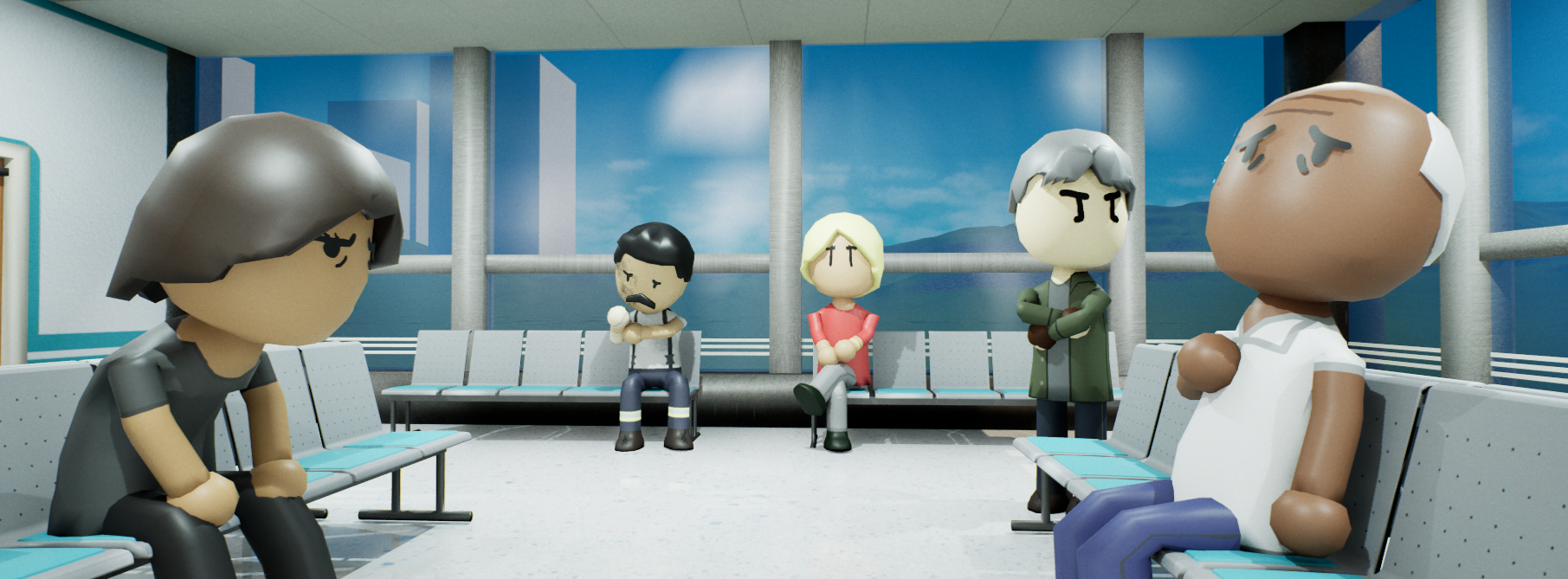
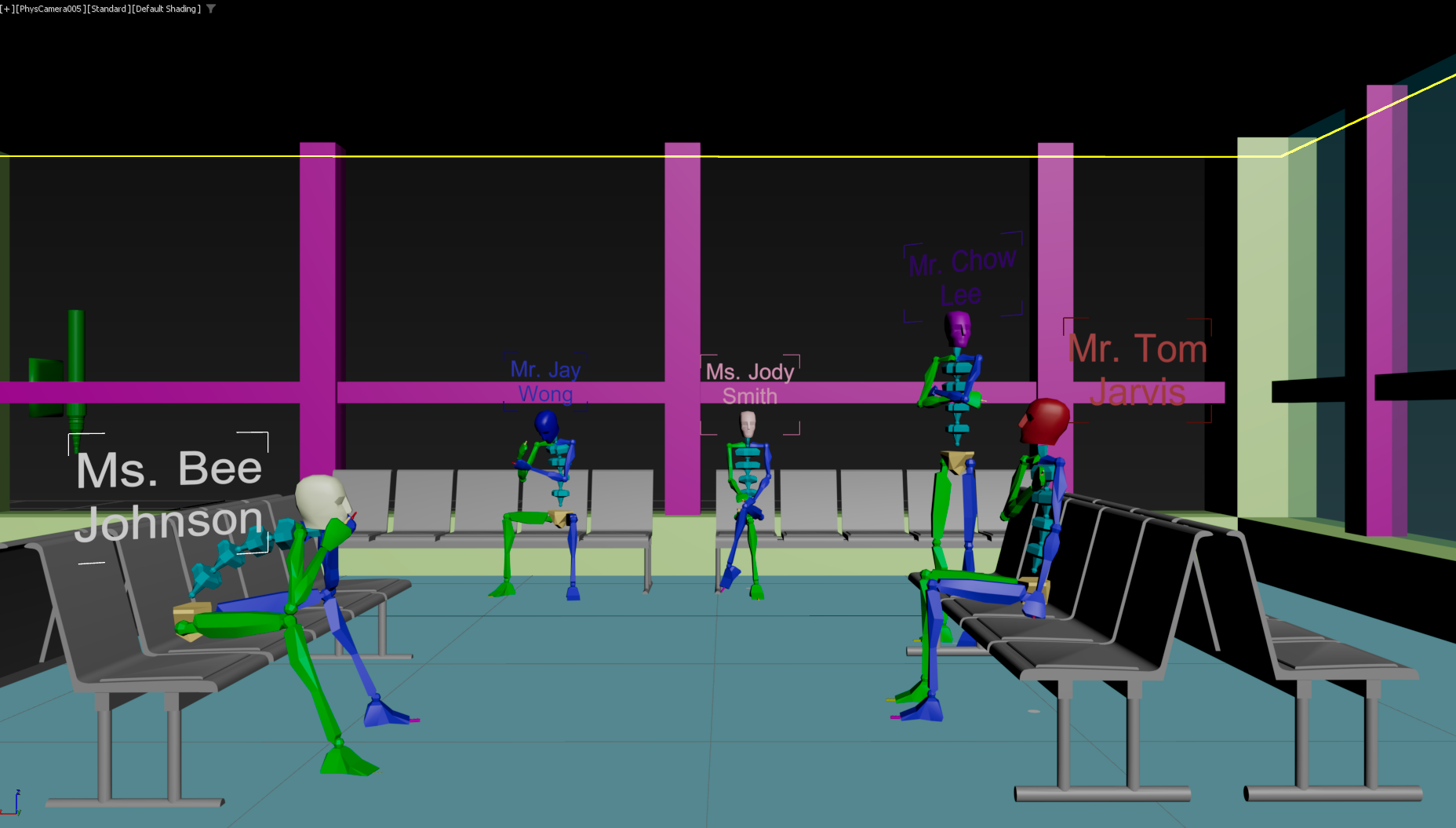 PrevizFinal
Drag the slider to compare the previs blockout with the final textured scene.
Case 1 - Acute Myocardial Infarction (Heart Attack)
This interactive emergency-room training simulation guides nursing students through patient triage and critical response during a heart attack scenario. Players apply ECG leads, administer oxygen, and prioritize interventions—all within a fully realized clinical environment. As Visual Director, I designed and built all environments, props, and characters in 3ds Max, textured them with Substance Painter, and ensured that the space and UI provided clear, immersive feedback to guide users' clinical decisions.
Case 1 Design Chart - Click to see contents
I made this chart in Obsidian as an initial draft for our collaborators to inspect and understand the direction I wanted to take this game. As part of my job I researched and wrote about medical descriptions, machines, locations, and instruments to ensure quality control and educational benchmarks.
12-Lead ECG mini-game assets that were planned and nearly executed, but were replaced in favor of the 3-Lead ECG simplified version.
Case 2 - Increased Intracranial Pressure (ICP)
In this simulation, nursing students assess symptoms and manage a high-risk neurological case involving increased intracranial pressure. Players must interpret visual cues, perform procedures, and stabilize the patient under pressure. Every medical prop, character, and environment was crafted by me from scratch in 3ds Max and Substance Painter, and assembled in Unreal Engine. The goal was to create visually intuitive spaces that helped students focus on critical decision-making in a tense scenario.
Animated EKG Variants
EKG readings and their contents change with the patient and their present condition. These were constructed in Adobe After Effects.
Characters
The characters you see in screenshots and footage were all modeled and textured by me. Although I did not name them, I would show screenshots of characters with my supervisors to get approvals for their design. The screenshots you see here demonstrate the pipeline for the characters. First I modeled and rigged them in 3ds Max, then I would import them into Unreal Engine, create controllers for their bones in-engine, pose them based off approved previsualizations, to finally texturing them.
GMU School of Nursing Playtest
Near the end of the development of the two cases, multiple pilot tests were conducted and eventually play tested in the classroom. The game was implemented into the project leader's, Professor Yanika Kowitlawakul, curriculum to be tested in real time group conditions. The programmer, Alex James, my supervisors, and I spectated as the students engaged with our simulation.
The Team
A Word From My Supervisor
I had the pleasure of working with Alex on Sim Escape, a digital escape room game developed at the Virginia Serious Game Institute for the College of Public Health's nursing education curriculum. Alex served as the artist on the project, contributing 2D and 3D work that brought the medical-surgical scenarios to life.
What stood out most was how easy Alex was to work with. He communicated clearly in our weekly team meetings, came prepared, and consistently took feedback well — turning suggestions into thoughtful iterations rather than just edits. On a project with collaborators across game design, nursing faculty, and instructional design, that kind of cross-disciplinary fluency made a real difference. Alex is a strong fit for any team that values craftsmanship, reliability, and a collaborative spirit. I'd happily work with him again.